
Gen Z has grown up with unprecedented access to communication. Messages can be sent instantly, friendships maintained across continents, and entire communities built around shared interests online. Yet despite being the most digitally connected generation in history, young people are also reporting record levels of loneliness and social isolation.
This contradiction has become one of the defining mental health challenges of our time. The problem is not simply how often Gen Z communicates—it is the quality of those interactions. Digital platforms excel at keeping people in contact, but they cannot fully replace the emotional depth of genuine human presence.
Experts from psychology, technology, and communication research increasingly point to the same conclusion: meaningful connection depends on experiences that happen beyond the screen.
Connected All the Time, Yet Feeling Alone
Dr. Nick Bach, a licensed clinical psychologist specializing in relationships, anxiety, and emotional wellbeing, regularly sees this paradox in his work with young adults.

As he explains:
“As a psychologist, I often hear Gen Z clients describe a strange contradiction: they are connected to people almost constantly, yet many still feel profoundly lonely. The issue usually is not a complete lack of social interaction. Instead, it is the difference between being connected and feeling genuinely connected.”
According to Dr. Bach, digital communication often lacks many of the elements humans have relied on for thousands of years to build trust and belonging.
“Social media, messaging apps, and online communities provide frequent contact, but much of that contact is brief, filtered, and carefully managed. Humans evolved to rely on facial expressions, eye contact, body language, touch, and shared physical experiences to build trust and closeness. When those elements are absent, a person can spend the entire day communicating and still feel emotionally disconnected.”
This distinction between communication and connection helps explain why loneliness can persist even in an age of constant notifications.
Technology Was Built for Attention, Not Belonging
Nicky Zhu, AI Interaction Product Manager at Dymesty, approaches the issue from another perspective: product design.

Having worked on technologies that mediate human interaction, she argues that the loneliness paradox is not accidental—it is built into the way many digital platforms operate.
“The platforms Gen Z uses were designed to simulate connection, not create it. There’s a fundamental difference. A like on Instagram simulates social acknowledgment. A comment on TikTok simulates conversation. A Snapchat streak simulates commitment. None of these produce the neurological reward of actual human presence — eye contact, vocal tone, physical proximity, shared silence. But they produce just enough of a dopamine signal to suppress the urge to seek real connection.”
From her perspective, the issue lies in what technology measures as success.
“Every engagement metric that makes a platform ‘successful’ is a metric that measures attention captured, not connection created. Time-on-screen, scroll depth, notification open rates — these are the KPIs that product managers optimize for. The incentive structure of social platforms is fundamentally misaligned with human wellbeing. Not because the designers are malicious, but because the business model rewards attention extraction, and attention extraction is the opposite of presence.”
Rather than asking how technology can imitate real connection, Zhu believes the better question is how technology can encourage people to return to the physical world.
The Confidence Gap Created by Digital Communication
Recent research from Preply reinforces this picture.
In a survey of more than 1,000 U.S. workers, researchers found that many Gen Z respondents are becoming less comfortable with spontaneous, face-to-face interaction despite communicating constantly online.
Among the findings:
- 66% of Gen Z said AI has made spontaneous conversations feel more difficult, compared with 51% across all respondents.
- 58% said they feel more comfortable communicating through text or AI than face-to-face.
- 44% reported freezing during in-person conversations because they cannot edit or review their words beforehand.
- 63% had used AI to avoid difficult conversations at work, while nearly one-third had done so many times.
Madeline Enos, who leads research communication at Preply, summarizes the trend:
“Connection isn’t just about how often you communicate, it’s about building confidence in the unedited, real-time moments where you can’t curate yourself. When every message can be polished first, the unpolished in-person ones start to feel harder, and people do them less. That avoidance loop appears to be a real driver of why Gen Z is more connected and, paradoxically, more lonely.”
Why Movement Can Rebuild Genuine Connection
If loneliness stems partly from a lack of authentic, embodied interaction, then activities that bring people together physically become increasingly valuable.
Dr. Bach points to dance as one example.
“This is one reason group activities, especially movement-based experiences like dance, can be so valuable. Moving in sync with other people creates a sense of shared participation that is difficult to replicate online. Research has shown that synchronized movement can increase feelings of bonding and social cohesion. It also shifts attention away from self-monitoring and comparison, allowing people to become more present in the moment. On a dance floor, people are interacting through experience rather than performance, which often reduces social pressure and encourages authentic connection. Many young adults feel highly visible online but deeply unknown in their everyday lives.”
By contrast:
“Communities built around recurring in-person activities create something different: repeated contact, spontaneous conversations, shared memories, and a growing sense of belonging. From a psychological perspective, those experiences are among the strongest protective factors against loneliness and some of the most reliable foundations for lasting friendships.”
Zhu reaches a similar conclusion from the perspective of human-centered technology:
“When Gen Z interacts through screens, they’re communicating as disembodied text and images. When they dance, play sports, or even just walk together, they’re communicating through shared physical space, rhythm, and presence.”
She concludes:
“The paradox resolves when you stop treating ‘connected’ as a synonym for ‘in contact.’ Gen Z is in contact with more people than any generation in history. They are connected to almost none of them.”
Rebuilding Belonging Through BREAKing THE WALLS
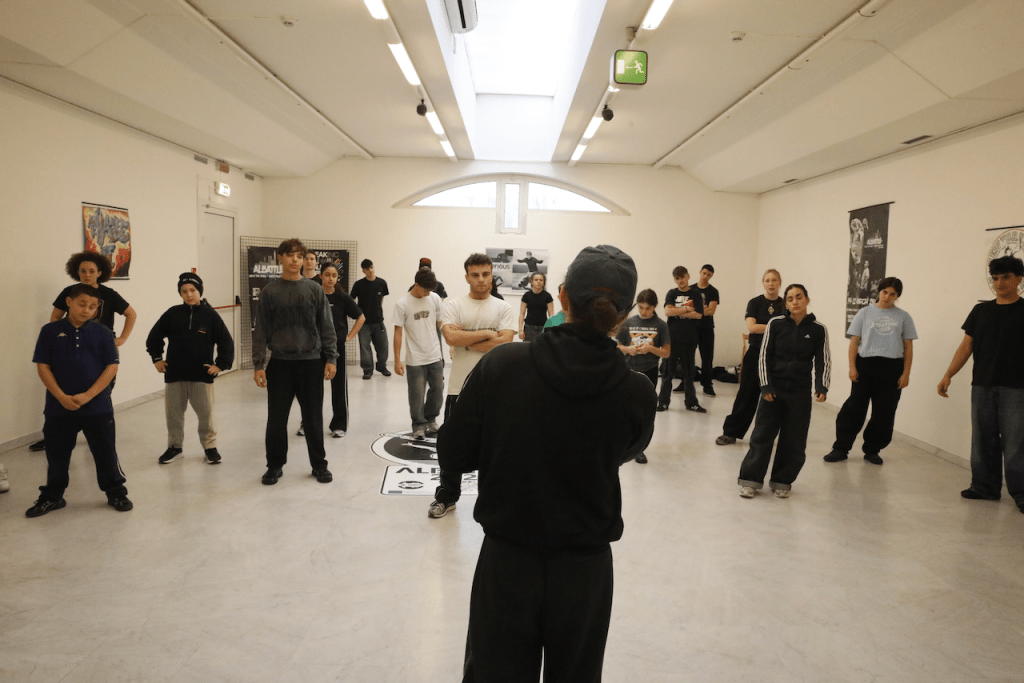
This understanding of connection lies at the heart of BREAKing THE WALLS, a European initiative that combines Dance Movement Therapy (DMT) with breaking culture to support the mental wellbeing of young people aged 11 to 18.
Rather than focusing solely on dance technique, the project creates opportunities for participants to communicate through movement, collaborate with peers, and develop emotional awareness in safe, supportive environments. By moving together, creating together, and sharing experiences face-to-face, young dancers build something that cannot be generated by an algorithm: genuine belonging.
In a world where Gen Z is constantly connected but too often feels alone, projects like BREAKing THE WALLS remind us that the strongest human connections are still built through presence, shared experiences, and movement. Dance becomes more than artistic expression—it becomes a way of rebuilding trust, confidence, and community, one step at a time.
👉🏻 Learn more about our project on our homepage.
 BREAKing The Walls